Hydro Excavation
Non-destructive digging that exposes a live line without touching it. Water cuts the soil, vacuum lifts it, and nothing mechanical ever reaches the utility.
Hydro excavation · Jetting · Private utility locating
Non-destructive digging for ground that already has something in it. Water cuts the soil, vacuum lifts it away, and the line you are digging toward is never touched.
Protect What's Below.
Safe, non-destructive excavation
Nothing mechanical ever reaches the utility.
Professional storm and sewer cleaning
Debris leaves on the truck, not downstream.
Precision utility locating
Including every private line 811 will not mark.
What we do
Digging, cleaning and locating are the same problem viewed from three angles: knowing what is under the ground before something expensive finds out the hard way.
Non-destructive digging that exposes a live line without touching it. Water cuts the soil, vacuum lifts it, and nothing mechanical ever reaches the utility.
A small hole, straight down to the line, so you have its real depth and offset on paper before a crew commits to anything.
A narrow vacuum-cut trench for conduit, cable or small-diameter pipe — a fraction of the surface damage an open cut leaves behind.
High-pressure jetting with vacuum recovery — the blockage comes out of the pipe and leaves on the truck, not into the next structure downstream.
GPR, electromagnetic locating and camera-and-sonde work on the private lines past the meter — the ones 811 does not come out for.
Why water
Mechanical excavation is faster and cheaper on open ground, and where the ground is open it is the right tool. The calculation changes the moment there is something live in the hole.
A steel bucket has no way to distinguish soil from a gas service, a fiber conduit or a water main until it has already cut through one. Pressurized water does: it erodes soil and stops at anything solid. That single property is why utility owners specify vacuum excavation near their own assets, why engineers use it to verify a design, and why it is often the only method permitted within a set distance of a live line.
Lines come up exposed, undamaged and with the coating intact — which is also what makes the photograph worth taking.
A small hole takes a patch. A trench takes a saw cut, a base repair and a stripe. On finished ground the method is usually the cheaper half of the decision.
Material goes into the tank as it is cut. Nothing is stockpiled beside an inlet or shoveled back by hand.
Piedmont saprolite is stiff, sticky ground that machines have to fight. Water does not fight it.
On site
Four frames, described plainly. If you have not commissioned this kind of work before, these are the things worth understanding about it.
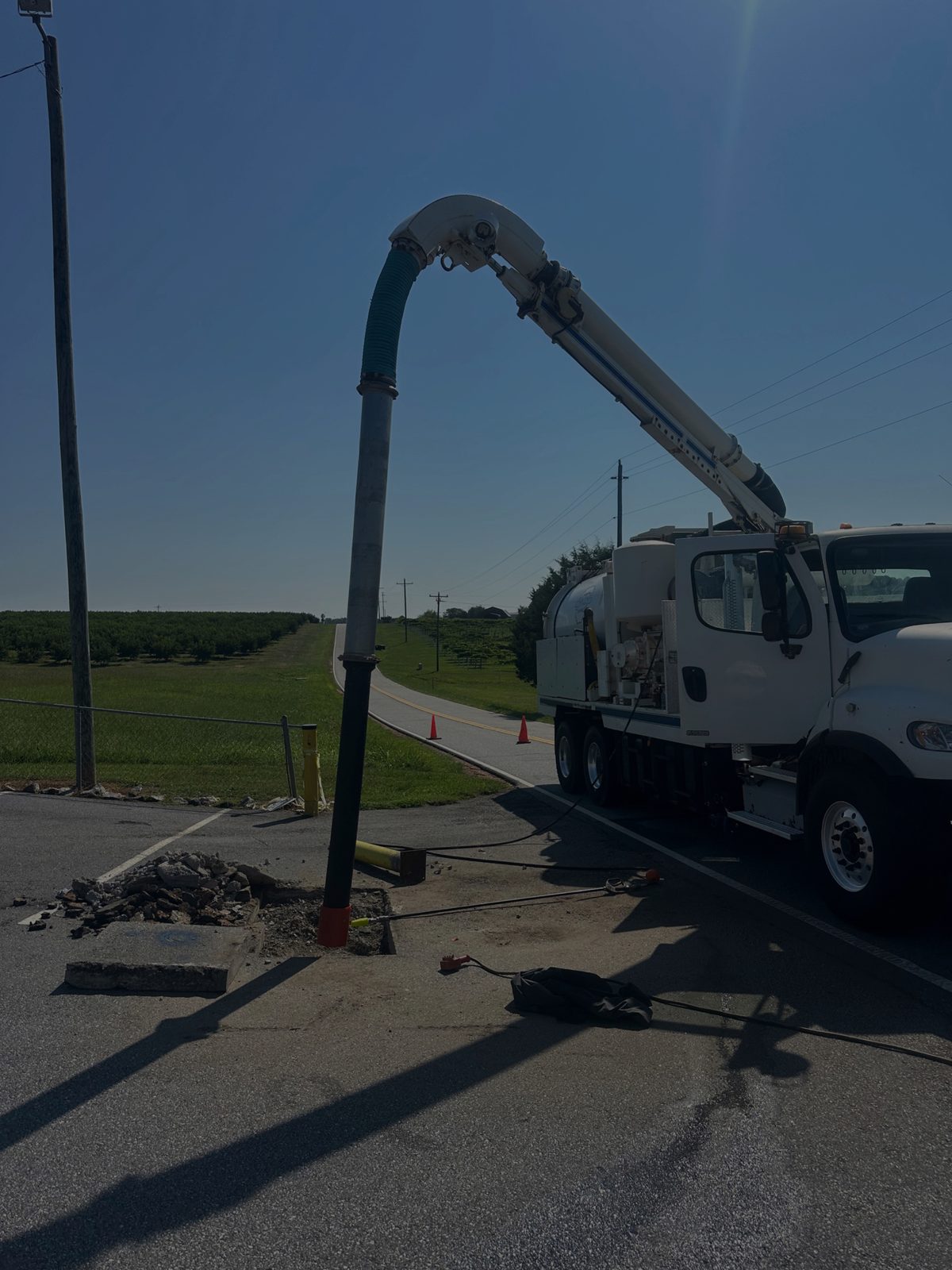
Boom out over the shoulder, spoil going straight into the tank. The truck stays on the pavement and the hose does the traveling, which is why this method suits work behind buildings, inside plants and anywhere there is nowhere to put a track machine.
Hydro Excavation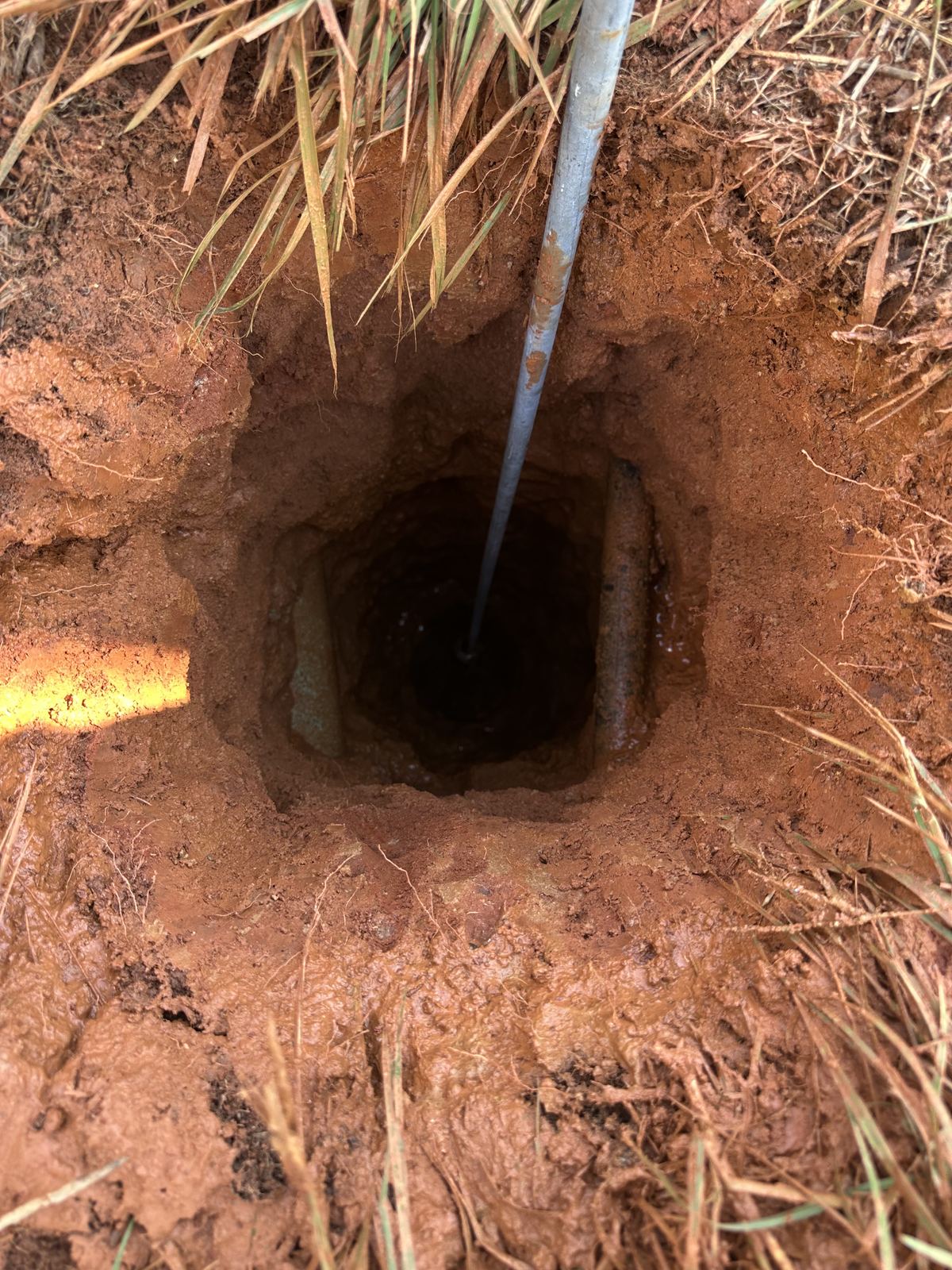
This is what a pothole is for. Clean vertical sides cut through Upstate clay, and the line at the bottom sitting exposed, intact, and measurable. Depth and offset get recorded here — before a bore, a tie-in or a design commits to a number off an as-built.
Utility Potholing & Daylighting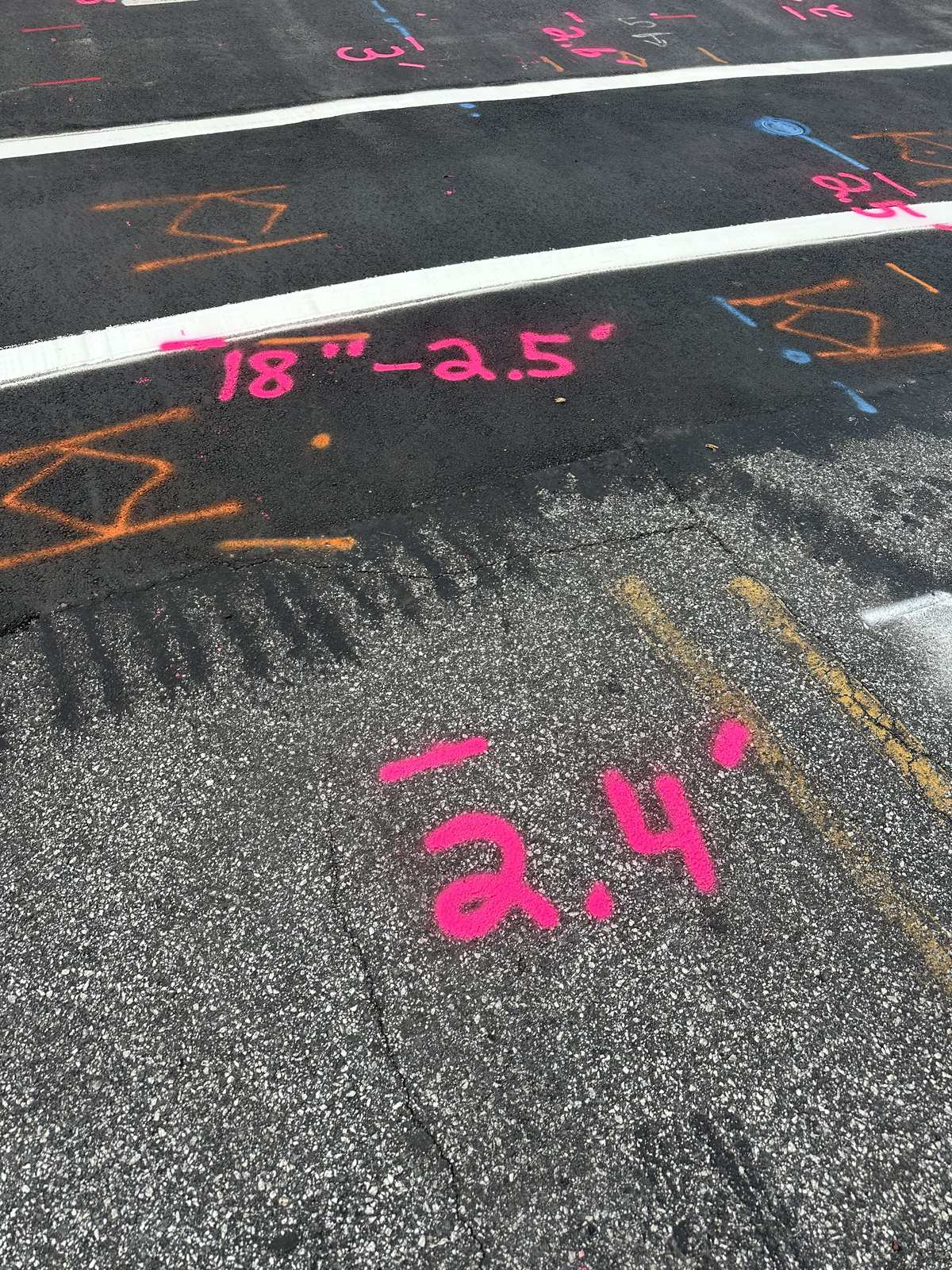
Paint on pavement, with depths called out. Useful, and not the same as certain: marks carry a horizontal tolerance and the depths beside them are estimates from the surface. Where the number has to hold, the next step is to open a hole and look.
Private Utility Locating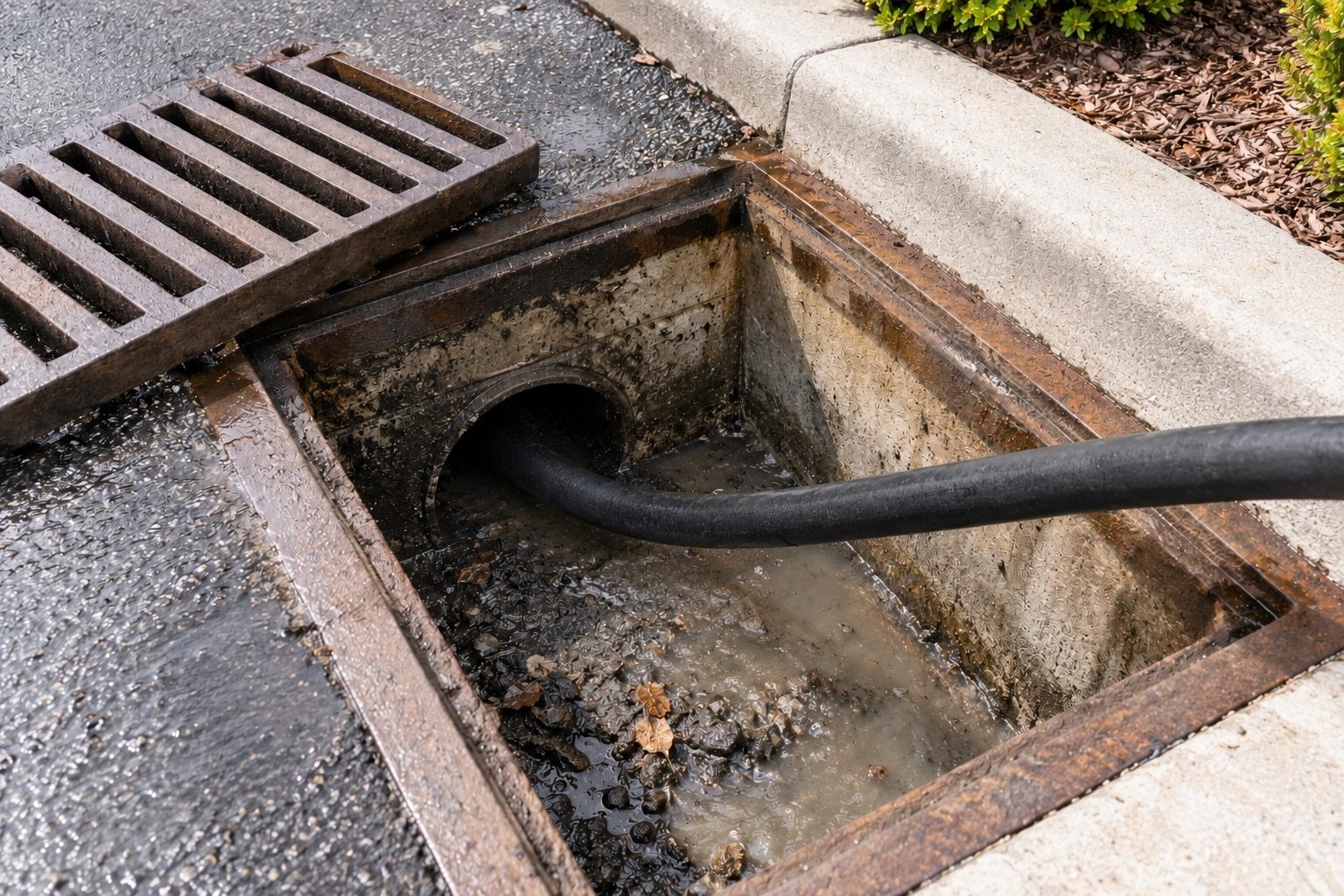
The hose is doing the part that matters. Jetting alone would break this material up and move it to the next structure downstream; vacuum recovery takes it out of the system and off the site entirely.
Sewer & Storm JettingWho calls
Clearing bore paths, exposing crossings, and finding out what is in the way before the crew arrives rather than after.
Potholing, bore pits, valve and meter exposure, and slot trenching in corridors already carrying four other services.
Storm and sanitary maintenance, catch basins and culverts, lift stations, and excavation in rights-of-way where a strike closes a road.
Test holes at the design stage, depth and offset captured as data, and conflicts resolved on a drawing instead of in a trench.
Private utility inside working facilities, where operations do not stop and no public locate applies.
Drainage that has stopped draining, wash-bay pits, parking-lot systems, and service runs nobody has a record of.
Where we work
Based in Upstate South Carolina and working throughout both Carolinas. These are the towns we are asked about most.
Common questions
Digging with pressurized water and a vacuum instead of a mechanical bucket. A handheld wand cuts the soil into slurry and a boom-mounted hose lifts it straight into a debris tank on the truck. Because nothing solid ever enters the hole, the method can work within inches of a live utility without damaging it. It is also called vacuum excavation, soft digging, or — when the goal is simply to see a line — daylighting or potholing.
Because 811 marks utility-owned lines, generally up to the meter or demarcation point, and nothing beyond it. Site lighting, irrigation, the feed to a pump house, gas to a generator, the sewer lateral, fiber between two buildings on one campus — all of it belongs to the property owner, and no public locator is coming out for any of it. On commercial, industrial and institutional ground that is most of what is in the way.
Because a bucket cannot detect a utility, it can only find one. On open ground with nothing underneath it, mechanical excavation is faster and cheaper and you should use it. The calculation changes when there is live line in the hole, when the surface above has to be put back, or when the ground is stiff Piedmont clay that a machine has to fight. Then the slower cut is usually the cheaper job once restoration and risk are in the number.
Based in Upstate South Carolina, working across North and South Carolina. If you are not sure whether your site is in range, call — distance is a scheduling question rather than a yes or no.
Where it is, what is in the way, what surface it is under, and what the finished condition has to be. Photographs and any as-built or site plan you have make the quote considerably more accurate — the contact form takes file uploads for exactly that.
That depends on where the work is, what it involves, and what is already scheduled — so rather than publish a number we cannot honor on every job, call and you will get a straight answer about this week.
Tell us where the job is and what is in the way. Photographs and a site plan get you a far more accurate number.