On site
What the work actually looks like
Four frames from the field, described plainly. If you have not commissioned this kind of work before, these are the things worth understanding about it.
Protect What's Below.
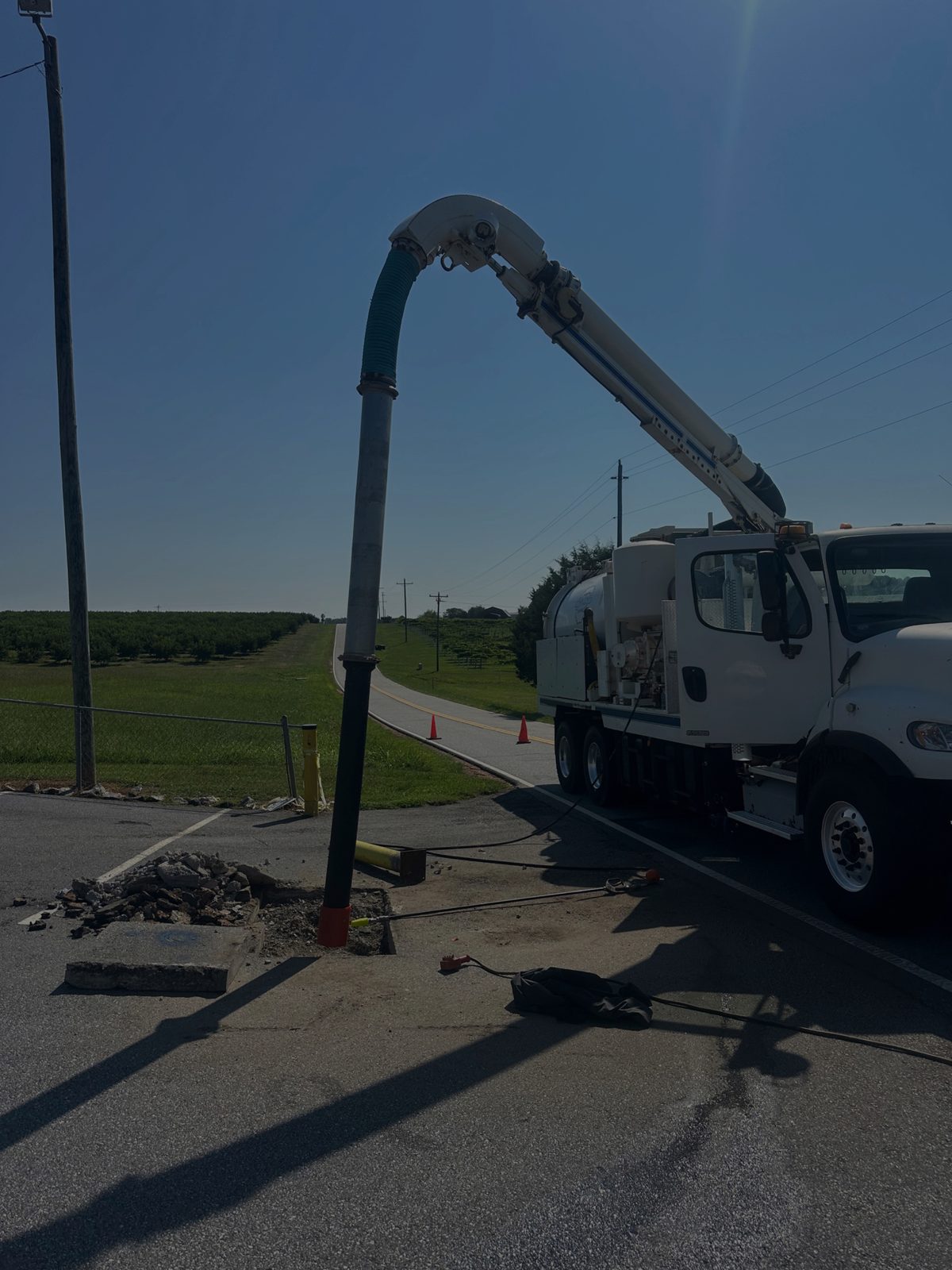
The truck, working
Boom out over the shoulder, spoil going straight into the tank. The truck stays on the pavement and the hose does the traveling, which is why this method suits work behind buildings, inside plants and anywhere there is nowhere to put a track machine.
Hydro Excavation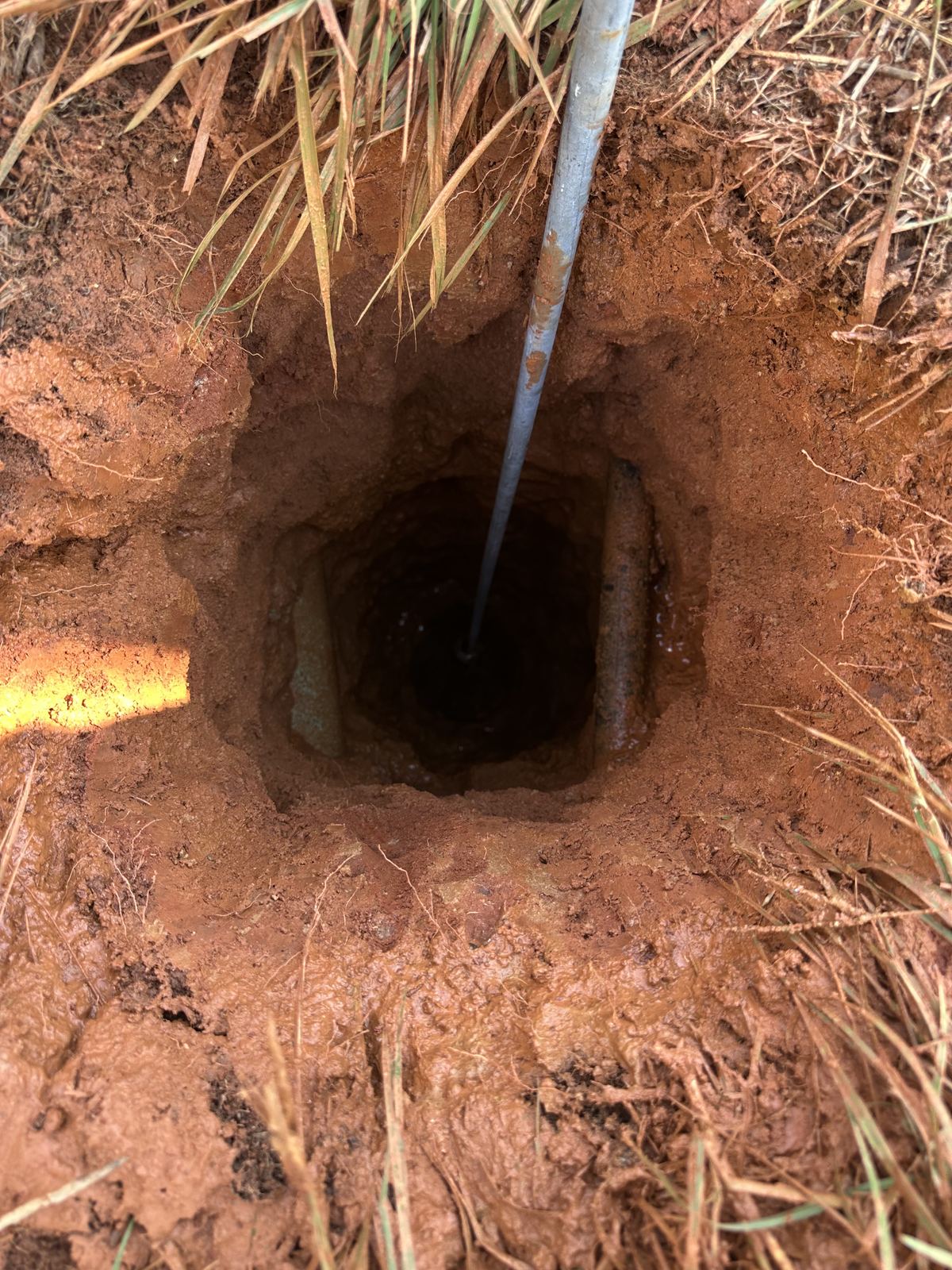
A test hole, at depth
This is what a pothole is for. Clean vertical sides cut through Upstate clay, and the line at the bottom sitting exposed, intact, and measurable. Depth and offset get recorded here — before a bore, a tie-in or a design commits to a number off an as-built.
Utility Potholing & Daylighting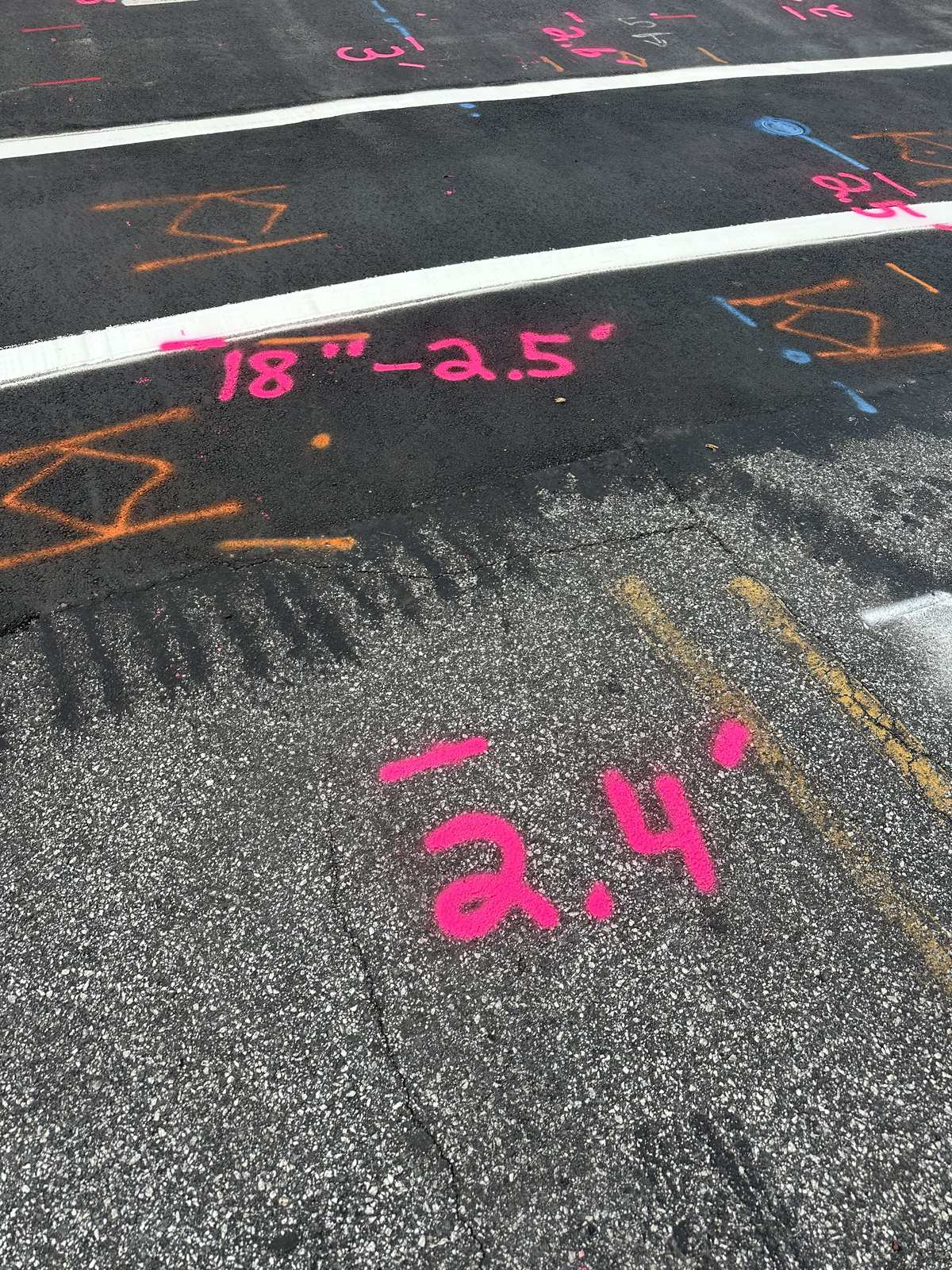
What a locate gives you
Paint on pavement, with depths called out. Useful, and not the same as certain: marks carry a horizontal tolerance and the depths beside them are estimates from the surface. Where the number has to hold, the next step is to open a hole and look.
Private Utility Locating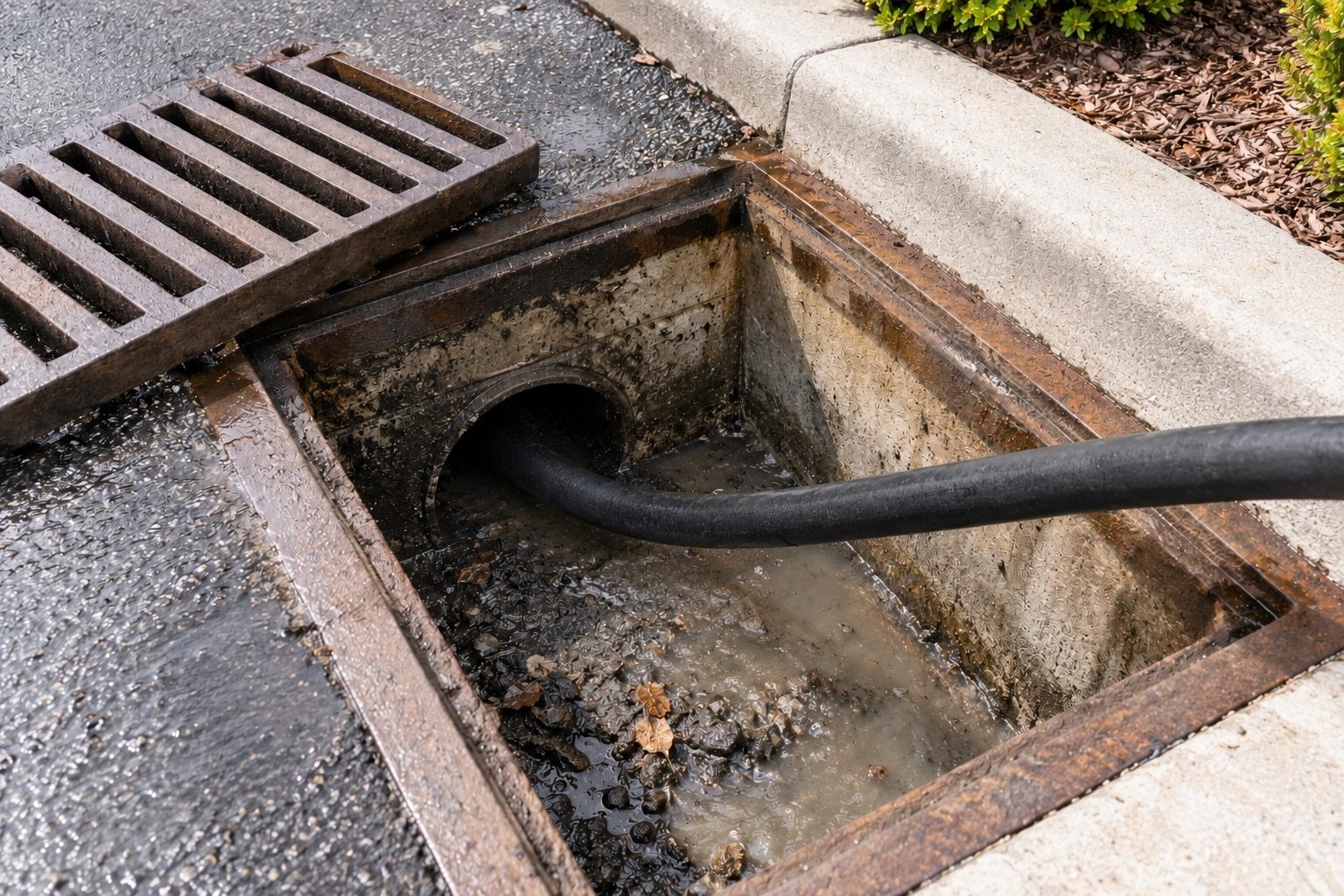
A catch basin, emptied
The hose is doing the part that matters. Jetting alone would break this material up and move it to the next structure downstream; vacuum recovery takes it out of the system and off the site entirely.
Sewer & Storm JettingWho calls
The work comes from six directions
General contractors
Clearing bore paths, exposing crossings, and finding out what is in the way before the crew arrives rather than after.
Utility contractors
Potholing, bore pits, valve and meter exposure, and slot trenching in corridors already carrying four other services.
Municipalities
Storm and sanitary maintenance, catch basins and culverts, lift stations, and excavation in rights-of-way where a strike closes a road.
Engineering and SUE
Test holes at the design stage, depth and offset captured as data, and conflicts resolved on a drawing instead of in a trench.
Industrial and plants
Private utility inside working facilities, where operations do not stop and no public locate applies.
Property and facilities
Drainage that has stopped draining, wash-bay pits, parking-lot systems, and service runs nobody has a record of.
Photographs are part of the deliverable
An exposed line is only worth the trouble if somebody can use the measurement afterwards.
Depth from finished grade, horizontal offset from whatever you are referencing, size, material, and a photograph of the line as found with its coating intact. That record is what turns a test hole into a design input — and it is also the thing that settles a later argument about who damaged what.
Talk it through
(864) 706-9511Describe the site, what is in the way and what the surface has to look like afterwards. You will get a straight answer about whether this is the right method.
Request a quoteGot a site that needs a look?
Send photographs with the request and you will get a far more accurate number back.